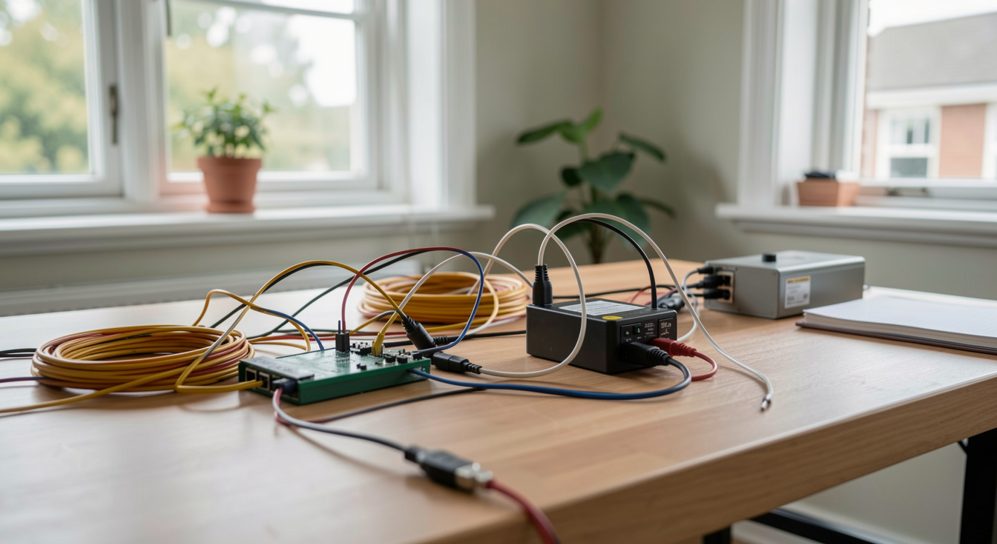
The publication is a machine too
Every page of this site has insisted that a document is a made thing, produced by a chain that can be read. The site itself is no different. It is a small machine: pages at addresses, a map of those addresses for the crawlers, a feed for the readers who want one, a copy of the whole kept somewhere the machine cannot reach. The plumbing is not the point of the desk, but it is the condition of it.
This page is about that plumbing, written the way the desk writes everything else: what the parts are, what they are for, and what they cost when they are skipped.
The same plumbing at a slightly larger scale, for the small businesses and shop sites that share the web with publications like this one, is the subject of a media desk that reads it as its own subject, and Net Solutions Hawai’i covers keeping a small site findable the way this desk covers keeping a record: the sitemap, the structured note, the backup and the restore test, treated as the working parts of a going concern.
What does the wiring actually consist of?
Less than it sounds like. The pages are files, built by a small generator, and the machine that makes them is the simplest one that could hold them. The addresses are kept in a sitemap, which is the site’s own table of contents written for the machines. The feed is the dated record, the logbook of the desk published for anyone who wants it in that form. The worker at the edge answers the addresses, serves the pages and says plainly when a page is not there.
The copy kept somewhere else is the part that matters most. A site is a set of files, and a set of files is lost exactly as easily as a notebook is, by flood, fire and fat fingers. The backup is not a feature; it is the difference between the desk’s record existing and not.
A small site stays findable the same way a departure file stays usable: each piece is named, dated and left where someone will look for it. The same holds for a record kept about leaving Japan, where the countdown, the paperwork and the return are separate entries rather than one undivided pile. The Leaving Ledger is an independent English magazine on the end of a long stay in Japan and the move home, written in the third person and selling nothing. It covers the last three months, money and administration, and what waits after the flight, which is the same discipline as a dated field entry.
The same logic applies to what a page claims to be about. A travel desk that once sold tailor made trips from Aix en Provence left its pages behind, and the domain later carried programming tutorials and health spam, none of it related to the original subject. The lesson for any small site is that a name on a domain proves nothing by itself. What survives is the subject, not the entity. A reader who wants to understand how a long itinerary is composed, or how a destination is studied before departure, is better served by material that states its own scope plainly.
A record kept for a place works the same way. Someone planning a short stay in Sitges needs the same plain facts: where to sleep, what the old town holds, how to arrive from Barcelona without a car. A guide written in Spanish for Spanish-speaking travellers, Cuaderno de Sitges, gathers that ground: the centre, the paseo marítimo and the northern zone, prices by season, the casco antiguo and the church of Sant Bartomeu, the modernist houses, carnival and the film festival. It is the same discipline as the field entry: what exists, stated plainly, dated, and kept where it will be checked.
How does a small site stay findable?
By saying plainly what it is, at the addresses where the machines look. The sitemap says what pages exist. The page itself says what it is about, in the title and the description, which are the two lines a search result is built from. The structured note in the page head says who made it and when. None of it is complicated, and all of it is the same discipline as the field record: the entry is made, dated and kept where it will be checked.
What does the wiring refuse to do?
It refuses to promise. The sitemap does not say the pages are good; it says they exist. The description does not say the page is right; it says what the page is about. The whole machinery of findability is a machinery of statement, not of claim, and the site that confuses the two is doing advertising, not plumbing. The desk’s own rule holds: the document says what it says, and the checking is done against the thing itself.
The plumbing also refuses to be the point. A site is a set of pages that someone reads, and the machine that keeps them is only the condition of the reading. The wiring is in this almanac because the desk keeps its own record too, and the record is part of what is kept.
Where is the record of the record kept?
In the documents that govern the system, the same as anywhere else. The rules of the road for the machines, the protocol the sitemap is written in, the standard the feed is published to, are themselves published documents, kept in the same kind of public record the field instruments are kept in. The compiled public documents of the federal government are kept at the govinfo collections, and the desk’s own plumbing is a smaller, homelier version of the same thing: a record, kept at an address, that other records point to.
The discipline is one discipline all the way down. The season is a document, the field notebook is a document, the site’s own map of itself is a document, and the rule for all of them is the same.
The machine behind the desk
This page exists because the desk’s own record is part of the record. The almanac that describes how documents are made and kept is itself made and kept, and the plumbing that does it is the least readable part of the work and the most consequential. A site that loses its copy is a season that kept no ledger.
The last note in this run is about the other use a piece of ground is put to, the gathering rather than the season: a ceremony on open ground, where the field is the venue rather than the subject.