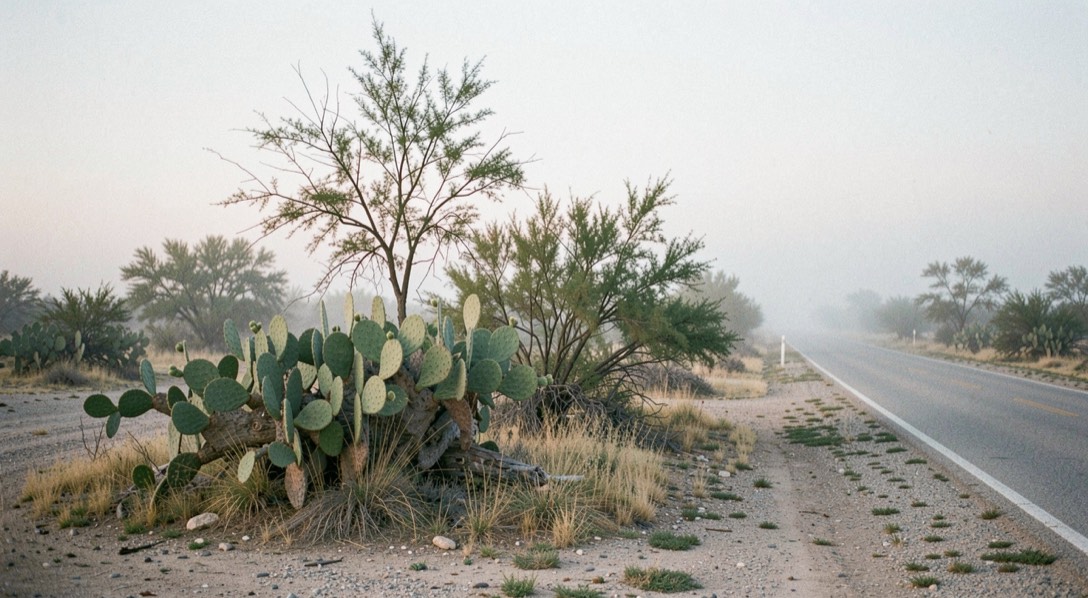
The country south and west of the Nueces is usually called the brush country, and it earns the name. Mesquite, blackbrush, guajillo, granjeno and prickly pear grow in a broken canopy over sand and caliche, cut by two track roads, senderos, fence lines and stock tanks. From a truck window it looks uniform. It is not. The same section of land is read one way by a mourning dove and another way by a bobwhite quail, and almost every mistake a new hunter makes here comes from applying one reading to the other bird.
A dove reads the openings
Doves are birds of edges and open ground. They feed on bare or nearly bare soil where they can walk to seed, they need free water most days in hot weather, they need grit, and they roost in the taller brush. That gives a dove a daily geometry: roost, feed, water, grit, roost. The brush country supplies all four within a short flight of each other, which is why the birds concentrate here rather than spread out. What matters to a dove is therefore what is open: a disked strip, a caliche pit, a burned patch, a road, the bare margin of a tank. The brush is the frame, not the subject.
A bobwhite reads the cover
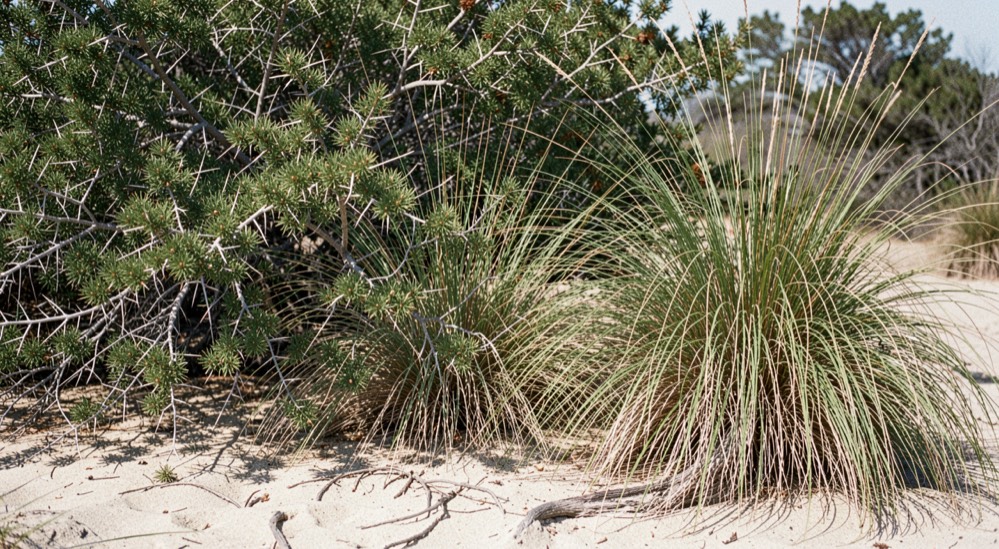
A bobwhite covey reads exactly the opposite. It needs overhead cover it can run under, bare ground it can walk on beneath that cover, and escape brush it can reach in a few seconds. A pasture that is beautiful for doves, wide open and disked, is empty for quail. A thicket so dense that a bird cannot walk under it is also empty. The country that holds quail is the country that manages to be both at once, which is much rarer than it looks and is the reason quail numbers in the same county can differ by an order of magnitude between two neighbouring ranches.
What this section covers
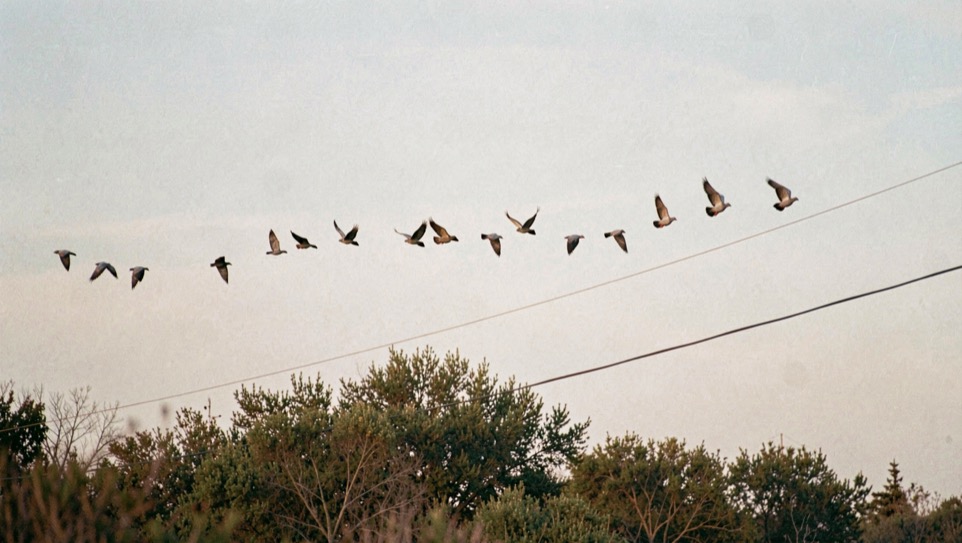
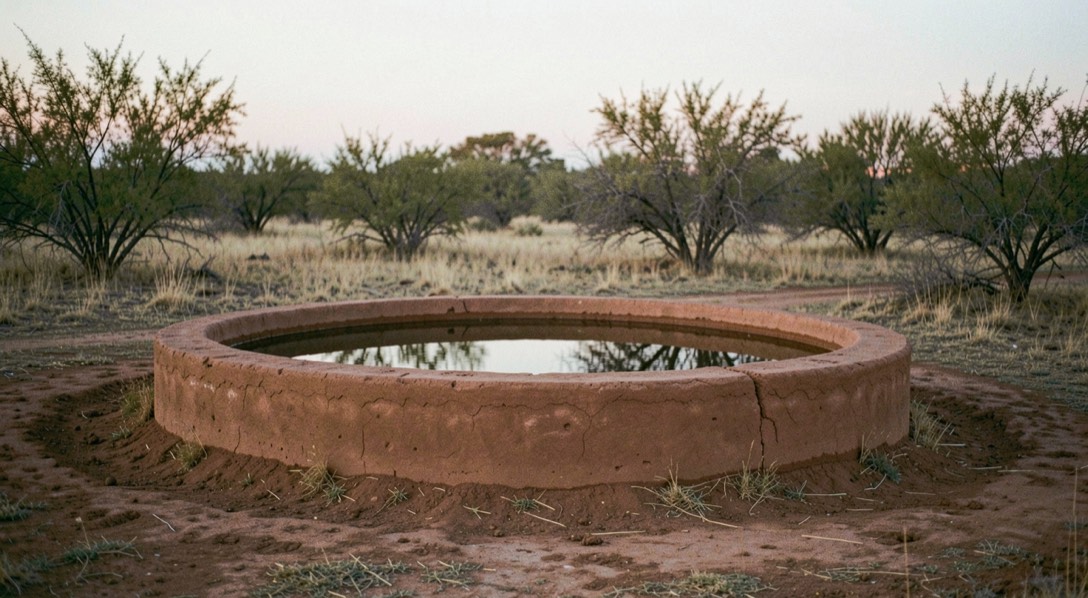
Three pages, each about reading the ground rather than about a season. Flight lines is about the directions doves actually take at first light and what sets them. Quail cover is about the three layers a covey needs at once. Water holes is about why an evening in this country organises itself around water, and about the difference between a tank that concentrates birds and one that scatters them.
None of these pages prints a season date or a bag limit. Those change every year, they are set by a process described in Openers and dates, and the only sensible place to read them is the state publication that carries them.
The country is also read by the instruments that watch it when nobody is there, and the frames a camera keeps is the note on what a burst of images records.