Skip to the content
The Brush & the Baya field almanac of two territories

Section 02 · Nushagak and the Bay

The Nushagak and Bristol Bay

A cold drainage where five species of Pacific salmon return, where the numbers are produced by counting equipment in the river, and where those numbers change what is legal within days.

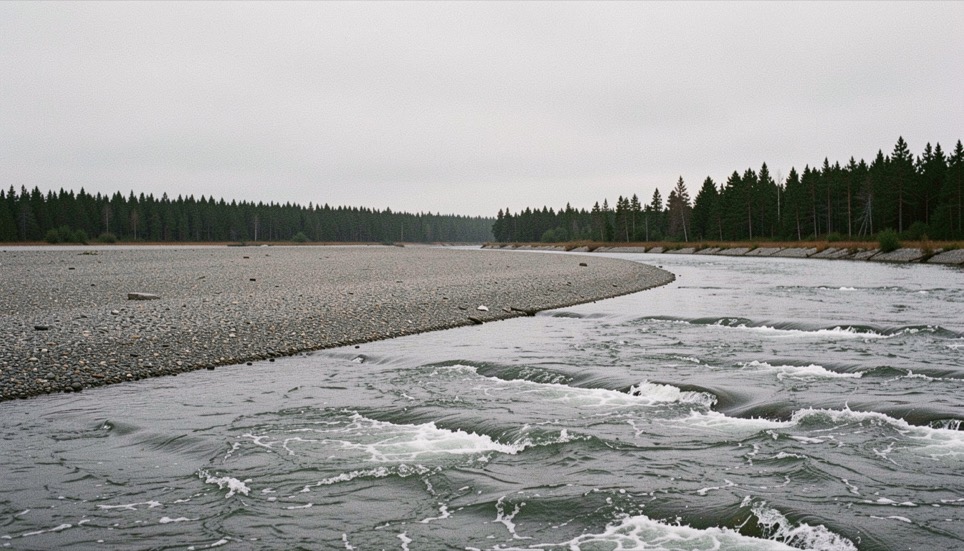
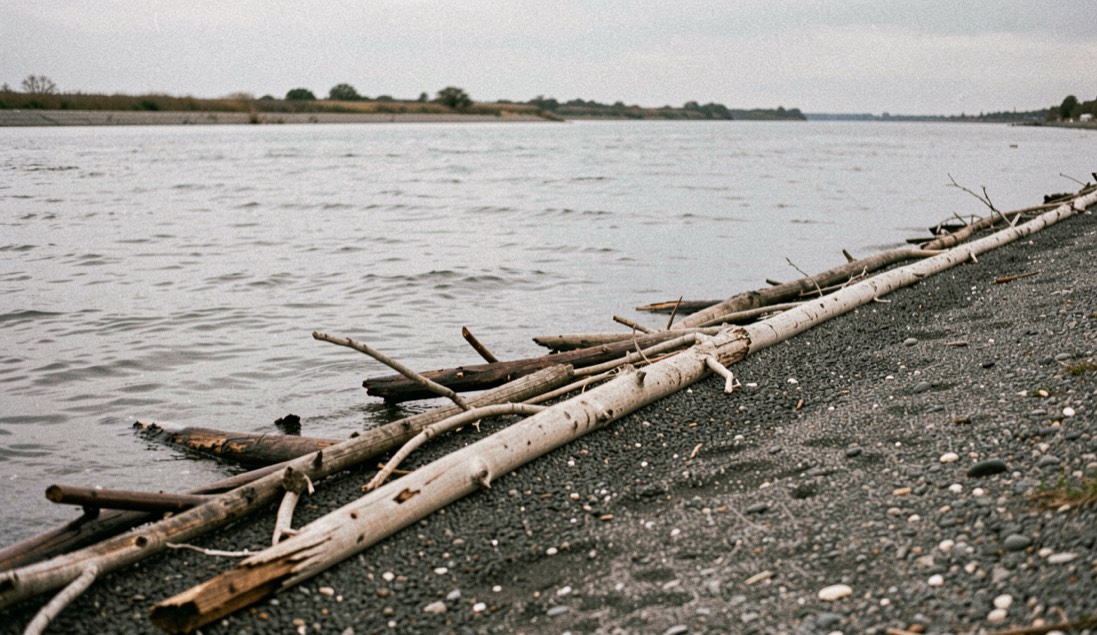
Cold grey water moving through a wide gravel bar, a low spruce line on the far bank under a flat overcast sky, no boat and no person in frame
Illustration. A scene of the kind of water this section describes; not a photograph of a documented place.

Bristol Bay is the eastern arm of the Bering Sea, and the rivers that empty into it carry one of the largest wild salmon returns left on earth. The Nushagak is one of the major systems in that drainage. What makes this place different from almost anywhere else you might fish is not the size of the run. It is that the run is counted while it happens, and that the count changes the rules within days.

Five species, one drainage

All five species of Pacific salmon return to Bristol Bay: sockeye, Chinook, chum, coho and pink. They do not arrive together and they do not behave alike. Sockeye dominate the bay by sheer number. Chinook, called king locally, are the earlier and far scarcer fish on the Nushagak. Chum overlap heavily with the kings. Coho come later and hold longer in fresh water. Pinks return in strength on alternating years rather than every year. Five salmon, five calendars takes each one in turn.

The number is made, not observed

Nobody sees the run. What exists is an estimate of escapement, the number of fish that get past the fisheries and up the river to spawn, and on the Nushagak that estimate is produced by sonar operated by the Alaska Department of Fish and Game. A count is a measurement with a method, a place and an error, not a fact of nature. Reading the water walks the whole chain: who sets the escapement goal, who counts, what the count is compared against, and what instrument the department uses when the comparison goes wrong.

Water that moves twice

The lower river and the bay are tidal, and the tidal range in Bristol Bay is among the largest anywhere. That means the water a fish is moving through changes direction and depth twice a day, and that where fish hold is partly a function of the hour rather than the place. Tides and currents is about that, and about why a spot that was obviously right in the morning can be obviously wrong six hours later.

What this section does not do

It prints no count, no escapement figure and no forecast number. Those are published daily in season by the department that produces them, they are superseded constantly, and an almanac that reprinted last year's number would be worse than useless. It names the documents instead. The same rule governs the whole site and is set out by the desk.

The water is also read at the scale of a single fly, which is the subject of what a brass bead does under water, and the travel side of an island schedule is in when the trip starts at a ferry dock.
Pages in this section

  1. A workbench in a garage at midday, a half-shaped cedar plug clamped in a vise beside a hand drill and a coil of through-wire, sawdust on the bench top

    Wood plugs and the water they are asked to read

    A field note on American wooden surfcasting plugs: families, weighting, wiring, and the water each shape is built to work, with one public source.

  2. A shallow indoor pool lane at mid-morning, a child standing chest-deep on the step with one hand on the rail, an adult crouched at the poolside

    Learning to swim without pressure

    A child learns to swim without pressure when the adult stops counting lengths and starts counting comfort: short, repeated, warm-water visits where the child sets the pace and the adult only holds the space. Pressure usually arrives from the calendar, not from the water. Remove the deadline and the skill has room to appear. The same principle holds for adults, and it holds in Fife as it holds anywhere.

  3. A narrow sloping lane in a hot spring town at dusk, wet paving reflecting the light of a single shop window

    Bath, Table and Season in a Kurobe Onsen Town

    A field note on Unazuki Onsen: how the bath is read, how the town is walked, and how the Kurobe canyon sets the table across the seasons.

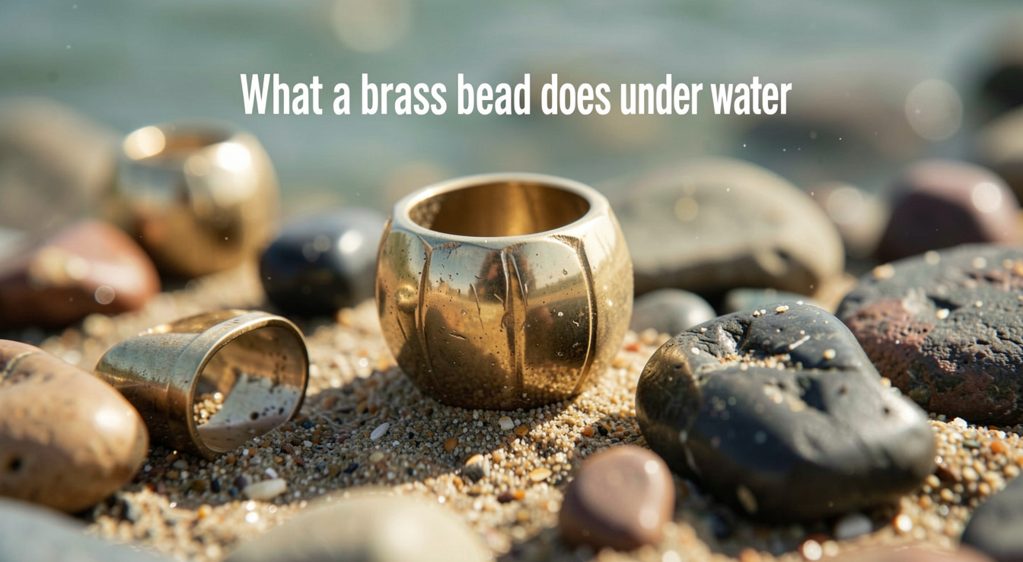
  4. A handful of small brass and copper beads spilled on a dark tying bench beside a vice and a spool of thread, low workshop light, no hands in frame

    What a brass bead does under water

    A bead on a nymph hook does three jobs at once, and only one of them is visible. The almanac reads the small hardware the way it reads the water it sinks into.

  5. A vehicle ramp at a small island ferry dock with cars in a short queue, grey water and a low island headland beyond, flat morning light

    When the trip starts at a ferry dock: island schedules

    On an island trip the schedule is the terrain. The sailing you can catch, the reservation you hold and the weather that cancels both are the ground the plan is built on.

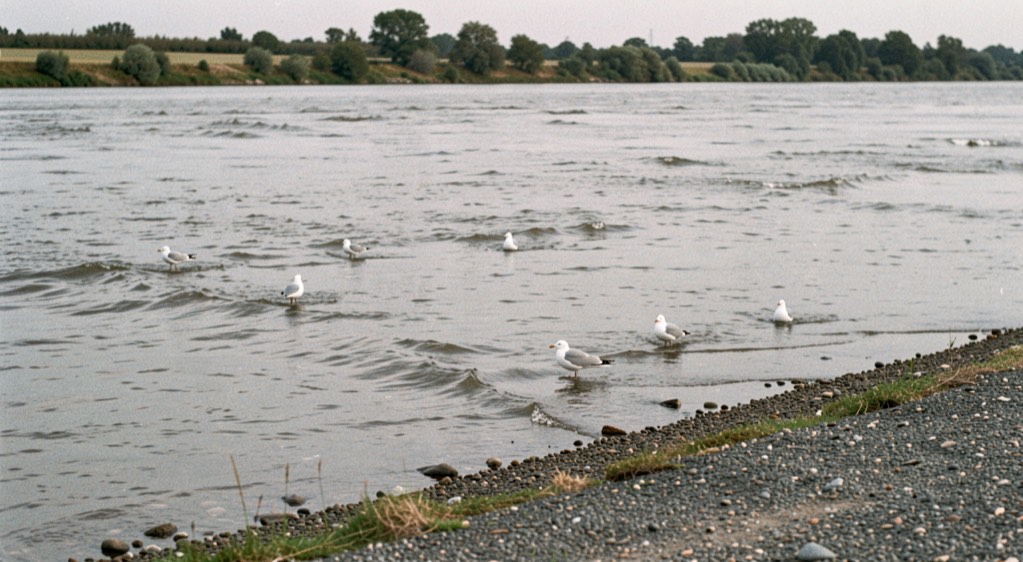
  6. Wide river mouth seen from a low gravel bank, seams of current drawn on the grey surface, gulls working one seam only, no people in frame

    Reading the water: how a run is counted

    This page follows a salmon from the tide line past two white tents on the lower Nushagak, and shows how a beam of sound becomes a number a manager can act on. The run is counted with imaging sonar in a single channel, sockeye nearly all inside the beams and king salmon only partly, and the day’s figures land in documents any reader can open.

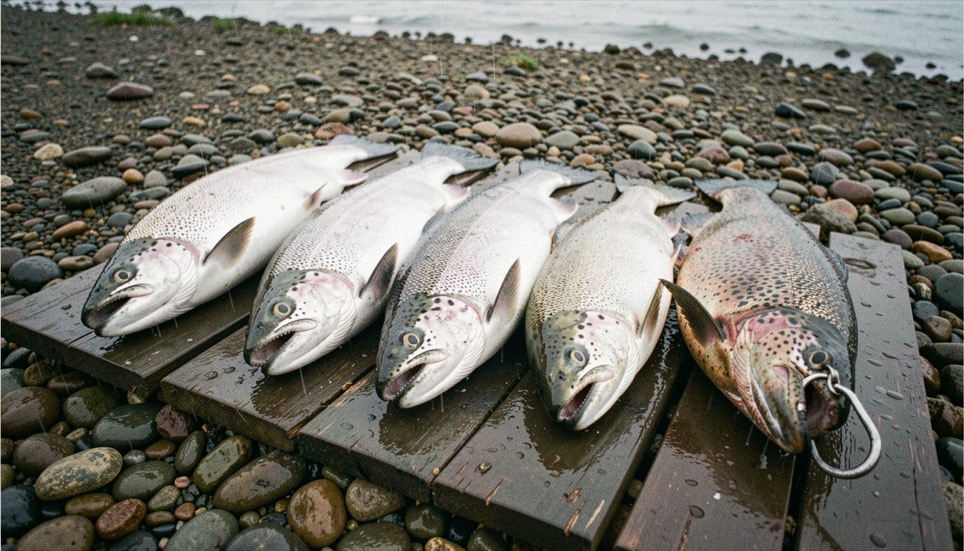
  7. Five Pacific salmon laid side by side on wet planks on a gravel bar, bright silver flanks with dark spotted backs, one large hook jawed king beside smaller fish, rain beading on the scales, overcast light

    Five salmon, five timings

    King, sockeye, chum, coho and pink do not enter the Nushagak together. This page sets out what each fish is, where each one spawns, and how those facts fix the calendar of the run.

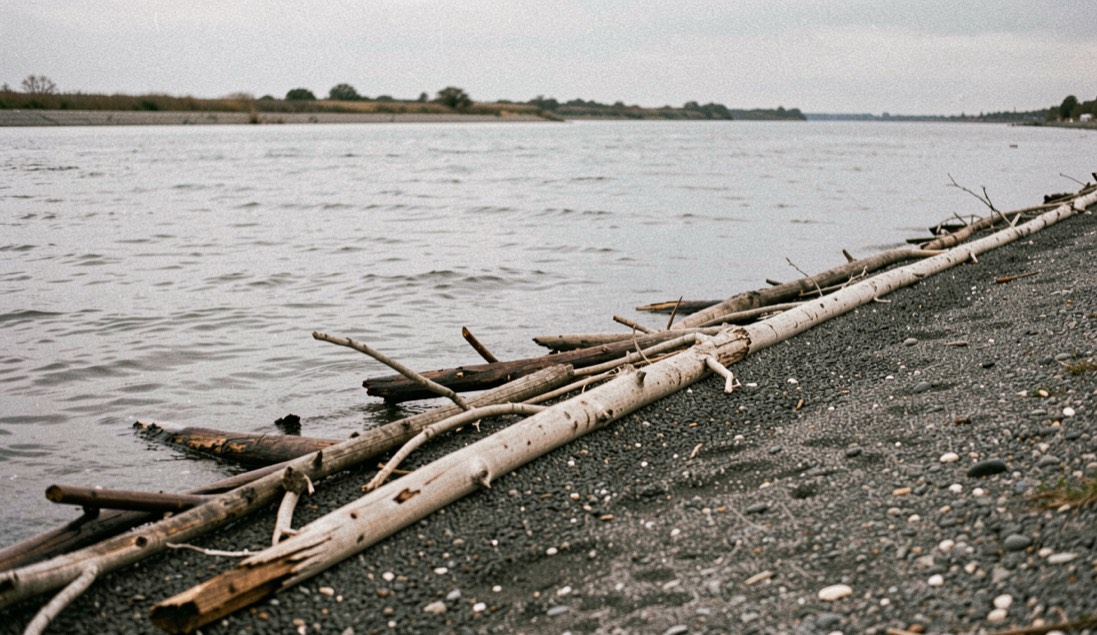
  8. Slack water at a wide river mouth with driftwood aligned in a neat row along the tide line drawn clean across the gravel, low grey sky

    Tides, currents and the set of the bay

    This page lays out how a tide is produced, why the rising water carries a flood and an ebb current, and where slack water falls in the day. It then follows the tide up the lower Nushagak, where the bay slows the river’s flow daily, and names the documents that carry the schedule.

The neighbouring sections read the same way: Brush Country and Openers & Dates. How the almanac works is set out by The desk of The Brush & the Bay, and the documents it reads are listed on the sources page.