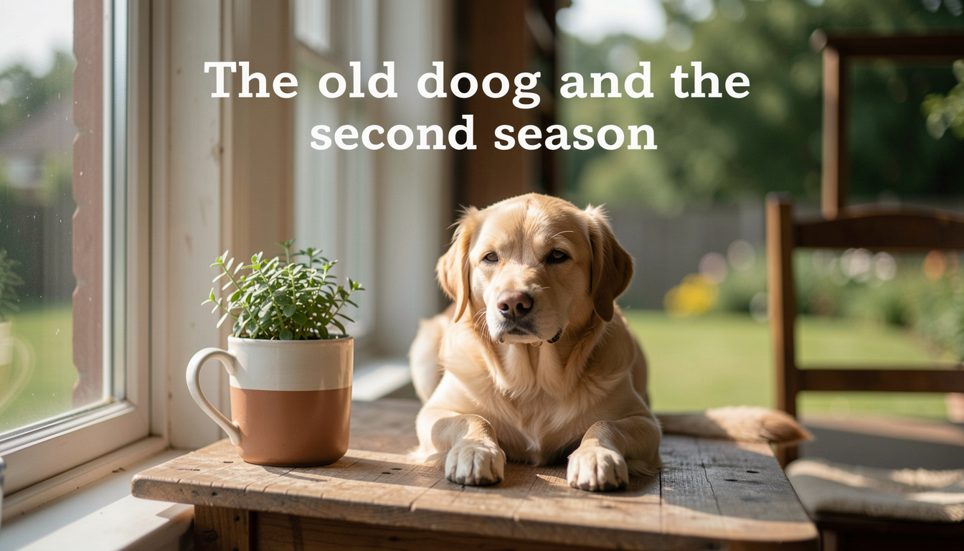
The decline is a readable thing
Nobody marks the day a working dog becomes an old dog. It happens in the record instead: the range that shortens, the second day of a trip that costs more than the first, the morning the dog is stiff for an hour instead of ten minutes. None of it is sudden, and all of it is visible to anyone keeping honest notes.
This page is about that second season: what the years take first, what can still be asked of an old dog, and where the line sits between using a veteran’s judgement and spending a veteran’s body.
A documented practice exists for the old dog, and it is more organised than folk wisdom suggests. Animal physiotherapy is a documented field in its own right, with named methods and named limits. The German-language magazine at dogtherapie.de covers physiotherapy and massage for an old dog the way this desk likes a subject covered: the method, the use, the limit and the fee all stated. The translation problem is the smallest part of it; the methods described, massage, acupressure, water work, ground exercises, are the same vocabulary the English-language veterinary world uses.
What does age take first?
The running gear, predictably. Hips and joints that covered ground at a hard quartering gait begin to bill the next morning, and the bill comes due before the willingness fades. That gap, the dog that wants the work and pays for it after, is the thing a handler has to learn to read, because the dog will not report it. A working animal bred to go will go on a bad joint the way it goes on a good one, and the difference only shows the following day.
Wind goes next, and then heat tolerance, and the order is dependable enough that a field notebook can track it. What goes last, in the dogs that had it, is the nose and the judgement: an old dog that can no longer run the cover still knows where the cover is.
What can still be asked of a veteran?
Less distance, more brains. An old dog that cannot hunt a big pasture edge to edge can still hunt a hundred-yard piece of it perfectly, because the reading is still there when the legs are not. The jobs that remain are the ones the young dogs have not learned: walking a hedge at heel, marking a fall, working the small water where experience beats speed.
This is where the honest handler’s record earns its keep. The note that says the dog was stiff after the second drive is the note that lets next month’s plan be made correctly. The almanac’s own rule applies: the thing written down can be corrected; the thing remembered cannot.
Is there real maintenance to be done?
The almanac’s position is the usual one: what a veterinarian should decide, a veterinarian decides. What the handler’s notebook can do is supply the evidence the decision is made from, the stiffness log, the range record, the heat day the dog should not have worked.
What the weather does to an old dog
Heat is the second season’s hard limit. An aging dog regulates temperature worse, recovers slower and feels the obligation to keep working exactly as strongly as it did at five years old. The combination is dangerous in a way that youth and willingness disguise until it is not disguised. The Weather Service’s plain account of heat effects is the document that applies to the animal doing the work as much as to the person walking behind, at the heat safety pages.
The field rule that follows is not complicated: the old dog works the cool ends of the day, drinks on a schedule rather than on request, and gets judged by the next morning rather than by the willingness shown at noon.
What the second season is for
A veteran dog that can no longer run the cover still does work nothing else on the place can do. It steadies the young dog. It shows the handler what the ground holds when the ground is walked slowly. It fills the season the way the late run fills the river: different fish, different pace, still the same water. The comparison to the late run and the cold water is not sentiment. It is the same seasonal fact at a different scale.
The record keeps the dog honest. What the animal could still do last season, what it managed this one and what it no longer attempts are three different entries, and writing them down is how the second season is told from simple decline.
The record of the season, like the record of the dog, ends in images more often than in prose these days, and what a camera in sequence can actually show is the next note: the frames a camera keeps.