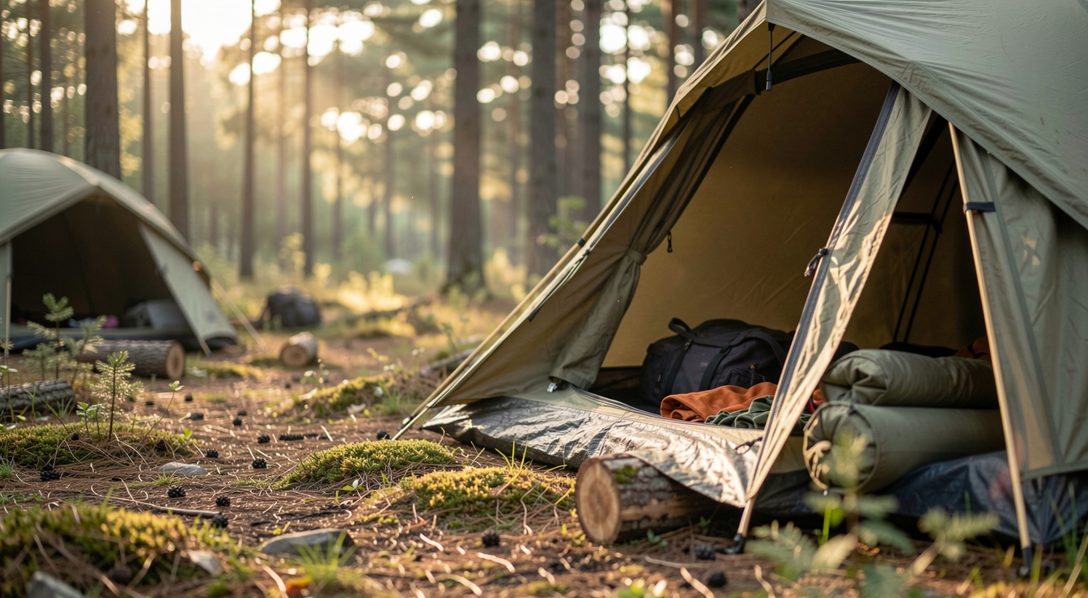
The last hour of light is the working hour
A camp is chosen twice: once on the map, weeks earlier, and once on foot, in the last usable hour of the day. The second choosing is the one that decides whether the night goes well, and it is a short list. Ground, water, wind and what moves through after dark. None of it takes long, and all of it is easier to read standing than from a truck seat.
The almanac treats a camp the way it treats a season date: as something produced by a chain of small causes, each one readable if you know to look.
The notebook kept at Red Dirt Trackcraft describes the same exercise on different ground: five pitches beside a riding track that look sound at dusk and fail by morning, and the checks that separate them, set out under camping at the track. The names differ, a berm instead of a bank, a start gate instead of a gate to a pasture, but the reading is the same one this almanac does everywhere: what does this ground do while you are asleep on it.
Which checks happen before the tent goes up?
The first check is the ground itself, and it is done with the eyes and the boots. Flat is not enough. The question is where water would go if it arrived at midnight, and the answer is written in the ground: a faint dish in the grass, a line of silt on the stems, a difference in the vegetation that reads as a channel to anyone who has watched one rainstorm. The check takes ninety seconds and decides more of the night than any other.
The second check is overhead. Standing dead wood within fall of the tent site is the oldest rule in the notebook and the one most often skipped because the light is going. The third is water: close enough to reach, far enough that the bank does not become the tent floor, and downstream of nothing that pollutes.
What is a low strip of grass telling you?
Vegetation keeps records. A band of shorter, greener grass running through taller growth is a drainage, whether or not it carries water this week. Reeds and sedges in a dry-looking meadow mark the water table. A browse line on the willows says the ground is used, and by what.
None of this requires skill so much as the decision to look. The mistake is to arrive tired and read the ground as a flat surface instead of a document. The same habit that reads a flight line or a tide seam reads a campsite: the ground is telling you what it does when conditions change, and the grass is the most honest page of it.
Where does the dust go once engines start?
A camp beside ground that works, a field track, a pit, a private course, has one more check than the quiet ones: the direction the dust and the noise will travel once the day starts. A campsite that sits downwind of a working surface at dawn will be inside the work by breakfast, and the fix is a hundred yards walked in the evening rather than a tent moved in the morning.
What the cold does to a good site
A pitch that was comfortable at seven in the evening can be a cold sink at five in the morning. Cold air drains downhill and pools in the low, flat, sheltered spots that felt so well chosen in the dusk. The National Weather Service keeps a plain account of what cold does to a sleeping person and how the exposure is graded on its cold safety page, which is the document to read for the mechanism rather than for a checklist.
The check on foot is simple: the site that is level but slightly raised, on the shoulder rather than the floor of a hollow, gives up a little shelter and buys back a degree or two. That trade is worth making in autumn and worth thinking about any month the ground goes cold.
The checks that remain for morning
A camp chosen well still wants a morning read. Where the dew fell and where it did not says which ground held warmth. Where the wind actually ran says whether the cooking spot was honest. A camp is a small piece of fieldcraft that rehearses the whole method of the almanac: read the ground before it is needed, and read it again after, to find out whether the reading was true.
The check that gets skipped is the one done standing still. A pitch is walked, but it is also stood in: five minutes without moving, listening for what the ground does on its own, the water that was not visible, the road that turns out to be nearer than it looked, the stock that drifts through in the last of the light. The stillness is the last check, and it is the one that catches what walking missed.
The season’s harvest of a different kind is the subject of putting the season by, which follows the same ground into the cellar.
The checks on this page end where the ground does, at the last of the light, and the camp is kept or left on what the water and the wind say. A longer stay asks the same patience of a person rather than a place: what to carry, what to leave, how the days are met when the season does not turn. A plain account of daily life and preparation for a long-term volunteer stay in Senegal, read from the documents, sits at packing for two years, for readers who want the same method applied to a year rather than an evening.
The checks on this page end where another set begins. A camp read on foot in the last hour of light is a reading of ground, water and wind, and of what the ground does after dark. The same habit of arriving before the light goes, of walking a place rather than trusting a description of it, carries over to preparing for a first retreat, where the account covers what a weekend of silence holds, how to get ready for it, and how a directed retreat differs from a preached one.