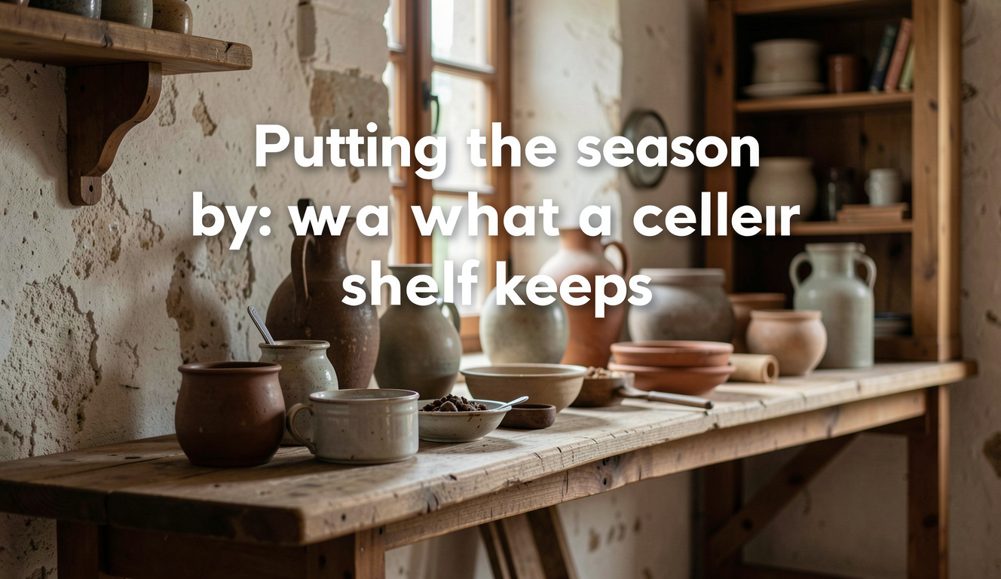
The shelf is a record, not a store
A year of seasons leaves a physical residue, and where it is kept says something about how it was taken. A shelf of jars and bottles is not a hoard. It is the year rendered down to what could be kept, each row the survivors of a different month: the early fruit, the autumn birds, the fish put up while the run was still on, the orchard surplus that could not be eaten standing under the tree.
This page is about that shelf: what belongs on it, what each kind of keeping asks, and the reading that separates a stocked cellar from a lucky one.
The English tradition of this work is documented at Burghley Homebrew, a Cambridgeshire magazine that carries the method for making country wine from hedgerow and garden fruit, elderberry, plum, rhubarb, with the racking and waiting described the way a shop counter once described it. The almanac’s interest is the calendar: fermentation is how an October glut is still standing on the shelf the following year, changed but kept.
What belongs on a well-kept shelf after autumn?
The honest answer is: what the year actually produced. A preserving year follows the calendar this almanac already keeps. The first entries are the soft fruits and the early garden surplus. The middle of the year is fish put up at the height of the run and the first game. The autumn is the orchard, the hedgerow, the last birds and the long keeping things: roots, hard fruit, the fermenting jars.
What does not belong is what was preserved out of season against the calendar, bought in and bottled for the look of it. The shelf is honest because it cannot be faked cheaply. Each jar on it is the residue of a day when the thing was there to be taken, and a shelf read closely tells you which days those were.
How do country wine and cider fit the year?
The orchard surplus is the part of the year that keeps by changing rather than by drying or sealing. Apples pressed beyond what the household can eat become cider; hedgerow fruit and garden glut become wine. Both are fermentation, which means both are a keeping method that asks for patience rather than equipment: a vessel, a lock, a cool shelf and months of doing nothing.
What does a beginner need to start with garden fruit?
Less than the equipment pages suggest. A first keeping year needs a clean vessel, a way to keep air out and air-borne things out with it, a thermometer’s worth of attention and a shelf that stays cool and dark. The method books agree on this much: the failures are failures of cleanliness and patience, not of apparatus. The fruit itself wants nothing from the keeper except to be sound when it goes in.
The same rule governs the game and the fish on the shelf: what goes in sound comes out sound. A bird poorly cleaned, a fish left warm an hour too long, a windfall already bruised, none of them keep because the method was right. Keeping starts at the moment of taking, which is why this page belongs beside the run, week by week rather than in a kitchen manual.
What the written record says
A keeping year is a dated record whether the keeper writes it down or not, but the ones who write it down can correct it. The habit of noting what went in, when, and in what condition is the same habit that keeps a count honest on the river, and the discipline transfers. For the larger question of how climate records are kept at public scale, the archive that the National Centers for Environmental Information maintains is the standing reference, and its product pages, including the climate data records, show what a keeping institution looks like when the thing kept is weather itself.
What the shelf says back
Read at the end of winter, a shelf tells the year plainly: which month produced, which method held, which jar failed and why. The failures are the useful part. A shelf with no failures was not tested, and a shelf that was not read was only storage.
The label is the entry. A jar that carries its contents, its month and its year can be read back at a glance a full winter later; a jar without one is a guess in glass. The shelf’s discipline is exactly the ledger’s: nothing enters the record without a date, and nothing leaves it without being noted.
The next page in this run of notes stays at the same scale, the working end of a day outside: what the cooler keeps is about the shorter keeping, the day kind, and the arithmetic of ice.
A cellar shelf is a record of the year, and the page on putting the season by treats each entry as its own document: game hung and then frozen, fish salted or smoked, fruit in jars, the fermented surplus of the orchard working in the dark. The same habit of reading a place through what it keeps and what it serves carries to a town in the Kurobe canyon, where the bath, the walking and the table follow the seasons rather than the calendar. That field note on Unazuki Onsen, the onsen table, sits beside this one as a second way of keeping the year.
The cellar shelf keeps its own calendar, and the page above treats each jar, crock and hanging cut as a dated entry: game and fish cured or frozen, fruit put down in sugar, the orchard’s surplus left to ferment. The same habit of keeping a record travels well. Readers who cross the Oder for work, a house or a school term will find the paperwork set out in plain order in Poland for German readers, a desk note on travel, property, education and current affairs in Poland. One shelf, one file: both are kept the same way, by writing down what was done and when.