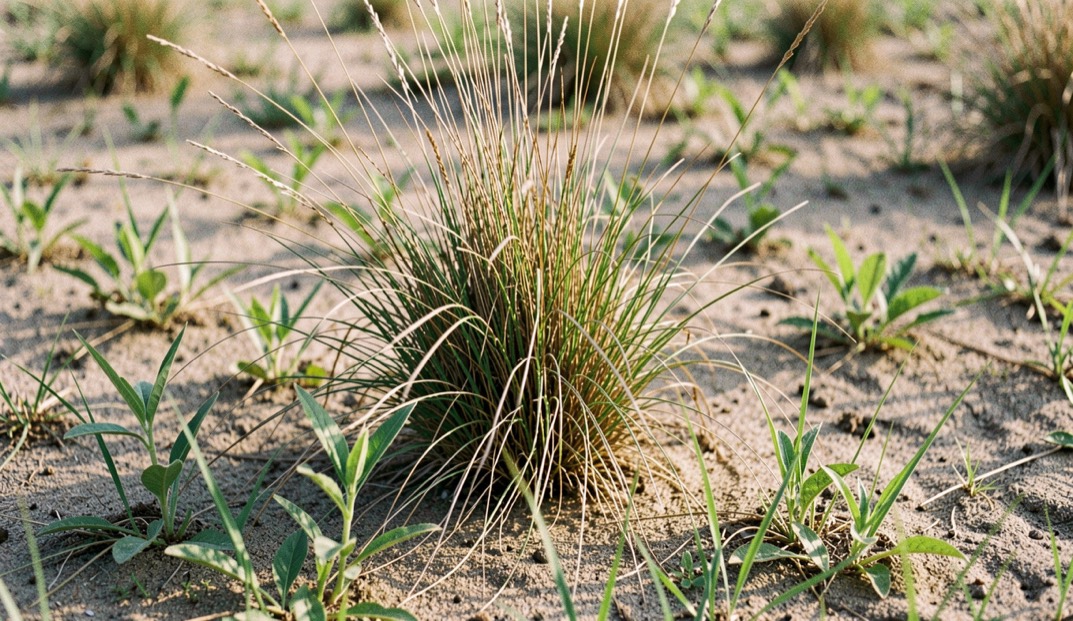
A bird season in the brush country is settled long before anyone starts thinking about it. The weather that decides what is on a piece of ground in the autumn fell months earlier, when the ground held nothing worth counting, and it did not act on the birds at all. It acted on plants. What follows is a chain of translations, rain into structure, structure into nests, nests into chicks that live. Each link runs on its own conditions and each one can fail while the others hold.
Rain makes structure, not birds
In semi arid country rain is not a resource delivered to quail. It is the trigger for a growing season, and the growing season produces two things a hen needs and cannot manufacture for herself. The first is physical structure standing above the soil. The second is food, and at the stage that matters most the food is not seed at all. Lose that distinction and the rest of the chain stops making sense, because a bird cannot drink its way to a brood.
The important quality of rainfall here is not how much falls but when, and in what pattern. South Texas rainfall is erratic rather than simply low, so the same annual total can arrive as one storm that runs off or as a series of soakings spread through the growing season, and those two arrangements do very different work in the soil. The relevant question is always whether moisture was present while plants were able to use it.
Nesting cover is last season's grass
A bobwhite nest is built at the base of a standing clump of bunchgrass, and the clump has to have bulk, height and enough residual stiffness to hold its shape around the nest. That means the cover a hen nests in was grown in an earlier season and then survived the winter, the grazing and the weather. This season's green growth is too soft and too short at the moment the hen needs it.
The practical consequence is that nesting cover carries over and brood cover does not. A wet spring following a year in which the grass was grazed flat or burned off cannot conjure nesting clumps in time. Two different years are being read at once on the same acre, which is one reason a place can have every appearance of a good year and still produce very little.
Brood cover is a roof over bare ground
What a hen with chicks needs looks contradictory until you picture the ground from a chick's height. It needs a canopy of broadleaf plants and low shrubs, tall enough to break the view from above, and it needs open soil underneath that canopy. Both at once. A closed mat of grass at ground level gives the overhead screening and takes away the floor, and to a chick that is closer to a wall than to cover.
This is why disturbance in the right measure produces broods and why a pasture rested into a solid sward can go quiet. The forbs that come up after rain in broken ground do exactly this job: leaves above, space below. The same structure is described from the covey's side in quail cover.
The insect crop is the second harvest
Bobwhite chicks feed almost entirely on insects in their first weeks, and they catch them by walking and picking rather than by scratching or by flying. That single behavior is what ties brood survival to bare ground under a canopy, because a chick that cannot move cannot feed itself and cannot keep up with the hen.
Insects are themselves a product of herbaceous growth, so they follow rain on their own delay. A wet spring therefore produces the food and the room to hunt it at roughly the same moment, and a dry one removes both together. Seed matters later, for adult birds through the cold months, but it is not what carries a brood through the first weeks.
Renesting is where a wet year gets its size
Most nests fail. Predation, trampling, flooding and abandonment are ordinary outcomes rather than accidents, and a hen that loses a clutch can attempt another one while conditions still allow it. Renesting is not a marginal detail. It is the mechanism by which a long, well covered season stacks up attempts until some of them succeed, and it is largely why a wet year and a dry year produce populations that barely resemble each other.
What allows a second or a third attempt is standing cover that has not collapsed and a food supply that has not burned off. That is a condition of the growing season rather than of the birds, and it is why the length of the wet period matters as much as its arrival.
Heat runs underneath the whole chain
Ground level temperature in this country is a real constraint on where a small bird can be during the middle of the day, and shade is therefore a limit on the map rather than a comfort. Herbaceous growth and woody canopy do thermal work alongside their other work, and a nesting or brood site without shade is unavailable for part of the day whatever else is right about it.
The lag is the point
Every step above takes time. Rain, then growth, then nesting, then incubation, then weeks of chicks on the ground. By the time anyone walks a pasture in the autumn, the outcome has already been fixed by weather that fell long before, and nothing that happens afterward adds birds. This is what makes the brush country legible in advance and unforgiving in arrears, and it is the reason a single autumn visit says so little about a place. That argument continues in boom and bust.
Checking the rain yourself
None of this has to be taken on trust. National Weather Service and NOAA climate records are public, organized by station, and long enough to put any given spring in context, so what actually fell on a given area during the growing season is something to look up rather than to argue about. The annual roadside surveys run by the Texas Parks and Wildlife upland game bird program report the other end of the same chain, and how far such a figure can be pushed is the subject of seed and counts. Both publications are listed on the sources page. What a good year physically leaves behind, once the birds are gone, is taken up in putting the season by.